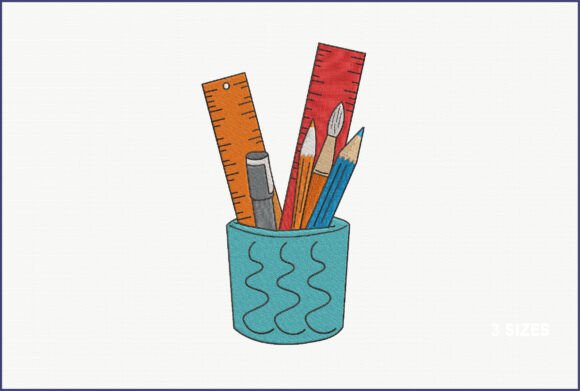
Practical Review: Stationery Holder Embroidery Design
When I evaluate a new machine embroidery design, I’m not just looking for a pretty visual. I’m looking for structural integrity, marketability, and how the file will actually behave when it hits the fabric. The Stationery Holder design, categorized under the School theme, caught my eye immediately. As a professional designer, I know that whimsical motifs like this can be a goldmine for a craft business, but they also require a sharp eye for detail to avoid a stitching disaster. The description promises a “fun, whimsical touch” for t-shirts, towels, and home decor, so I’m analyzing it from the perspective of a maker who has to deliver a flawless finished product to a paying customer.
First Impressions: The Charm of a Whimsical School Theme
The Stationery Holder design pulls you into a nostalgic, organized world. It’s the kind of visual that feels playful without being overly childish, which is a tricky balance to strike in embroidery. The layout likely features a mix of pens, pencils, or rulers arranged in a harmonious composition. The mood is instantly recognizable—it screams back-to-school, but it’s polished enough to feel like a boutique home decor accent. For a digital embroidery file, this first impression is everything. If the visual preview doesn’t translate well into a printable mockup, it won’t sell. Fortunately, this design has a strong, clear personality that translates directly into a desirable handmade product.
The Emotional Pull for Crafters and Buyers
For an Etsy seller or small shop owner, the Stationery Holder isn’t just a stitch. It’s a memory trigger. It’s the perfect personalized gift for a teacher who loves organized chaos, or a student heading off to a new year. The emotional pull is the hook that moves a product from a simple listing to a best-seller. When I think about buyer engagement, this design has a built-in story. Customers aren’t just buying a tote bag design; they’re buying a celebration of the School experience. That emotional connection elevates the final product far beyond a generic store-bought item.
Real-World Project Testing: Does It Stitch as Good as It Looks?
A beautiful digital preview is meaningless if the thread tension fails on a sweatshirt. The real test of any embroidery file is how it handles the pressure of a hoop and a fast-moving needle. I always run a mental checklist focusing on stitch density, pull compensation, and the overall stability of the thread path. Because the Stationery Holder is designed for a variety of blanks, I need to know it can handle the transition from a flat, structured surface to a soft, stretchy one without turning into a puckered mess.
The Teacher Appreciation Tote: A Pressure Test Case
Let’s put this design into a real scenario. Imagine preparing a custom order for a teacher appreciation week. You’re stitching the Stationery Holder on a natural canvas tote bag. This is a dream scenario. The flat, sturdy fabric texture of the tote provides the ideal canvas for the design’s details. I would immediately reach for a medium-weight cut-away stabilizer here. The goal is to prevent the satin stitch borders from sagging after a few months of heavy book-hauling. The stitch density needs to be high enough to cover the canvas weave completely, but not so dense that the needle perforates the fabric. This is where the design’s pathing becomes critical; a well-digitized file will allow the fill stitch to lay down smoothly without trapping the canvas fibers.
Adapting the Stationery Holder for Apparel and Home Decor
Moving from a tote bag to a sweatshirt requires a completely different strategy. The soft, stretchy nature of a sweatshirt is unforgiving of rigid digitizing. I’d switch to a fusible mesh stabilizer, hooping it with the garment to prevent the design from warping during the sew-out. The Stationery Holder must maintain its whimsical shape without looking like a stiff, plastic patch on the chest. For kitchen towels, the challenge shifts to texture. A looped terry towel can swallow fine details. I’d use a water-soluble topper on top of the towel to keep the running stitch and small lettering crisp, ensuring the design looks professional and holds up to frequent washing.
The Designer’s Guide to Technical Stitching Details
Before you press start, you need to scrutinize the technical components. The Stationery Holder design, like any good embroidery file, must be analyzed for its specific requirements. I can’t confirm the exact stitch count or file format from the preview alone, so I always recommend checking the product listing details for compatibility with your specific machine. However, I can assess the visual density and the implied construction.
Navigating Stitch Density and Fabric Texture
I always recommend a test stitch on scrap fabric—preferably the exact fabric you’ll use for the final run. A design with too-high stitch density can cause puckering on thin cotton t-shirts, creating a wrinkled halo around the design. Conversely, a lower density might let the shirt color bleed through on dark apparel. The key is contrast. If the Stationery Holder includes small text or intricate details common in stationery motifs, you need to confirm your hoop size can handle the registration. A slight shift during a color change can ruin the alignment of a pencil tip or a ruler edge, making the whole design look sloppy.
Thread Colors, Contrast, and Light vs. Dark Fabrics
Don’t assume the suggested thread colors will work on your material. A yellow pencil on a white t-shirt is a recipe for invisibility. I often run a black-and-white printable mockup of the design to check the tonal contrast before committing to a final product. The Stationery Holder needs to pop clearly on the fabric to ensure customer trust and eventual buyer engagement. I’d play with swapping standard bright yellow for a rich gold, or standard grey for a deep charcoal, to ensure the design assets hold their visual weight. If you’re selling online, your product photos need to show a crisp, professional result, and that starts with thread color selection.
Where This Design Shines (and Where It Could Struggle)
Knowing your limits is a sign of a great designer. The Stationery Holder is a powerhouse for specific niches, but it’s not a universal fix for every garment. It belongs to the School category, but that doesn’t mean it’s only for back-to-school. It’s versatile, but it has boundaries you must respect.
Best Projects for the Stationery Holder
This is a perfect match for boutique branding and personalized gifts. I see it thriving on:
- Sturdy canvas tote bags for book lovers and teachers
- Snap-tab pencil pouches for a coordinated back-to-school set
- Reading pillows with a soft, inviting texture for classroom corners
- Kitchen towels as a playful hostess gift for a coffee-loving friend
- Small embroidered patches for book bags or jean jackets
In these settings, the playfulness of the design enhances the product value. It turns a simple blank into a custom apparel piece that feels intentional and designed.
When to Proceed with Caution
There are a few scenarios where I’d hesitate before loading the Stationery Holder into my machine. Be extra careful with:
- Small hoop sizes: If the design is complex, a 4x4 hoop might struggle. Tiny details in the stationery items could become dense, solid blocks of thread.
- Curved surfaces like caps: The horizontal layout of a stationery holder might warp on a cap frame. You need specific digitizing for hats, and if this file wasn’t designed for that, the edges will bulge.
- Stretchy performance wear: Thin, slinky polyester blends require a high-quality cut-away stabilizer and a very precise stitch density. A heavy fill stitch can “bullet-hole” the fabric.
- Dark, high-contrast blanks: A black sweatshirt requires a solid underlay stitch. If the design skips on the underlay, the dark fabric will show through the bright thread colors, killing the vibrancy of the design.
Commercial Use, Branding, and Customer Perception
For those selling the finished product, this design carries weight. The School theme is reliable, but execution is everything. A poorly stitched Stationery Holder looks like a cheap knock-off. A well-stitched one elevates a simple towel into a boutique product.
Adding Value to Your Craft Business or Etsy Shop
Using this digital embroidery file correctly improves your brand consistency and professionalism. When a customer buys a handmade product featuring this design, they are trusting your eye for quality. I must stress the need to verify the licensing terms. Before you list the finished product in your Etsy seller shop or take it to a craft fair, double-check the design assets to ensure you have the commercial rights to sell items featuring this embroidery file. If you are only licensed for personal use, you cannot sell the finished project. For digital product sellers and creative entrepreneurs, this is a non-negotiable step.
Final Practical Verdict from a Designer’s Perspective
The Stationery Holder is a charming, niche-focused addition to a designer’s toolkit. It’s perfectly suited for the School category and brings a genuinely playful touch to the Embroidery world. It requires a conscious approach to stabilizer choice and thread contrast, but for the right project, it holds significant value. It’s a design that invites you to slow down, test thoroughly, and respect the craft. When you do, the result is a clean, professional finish that tells a story—a story that customers will genuinely love and pay for.