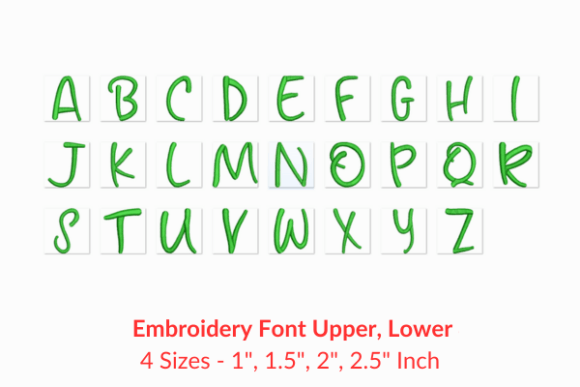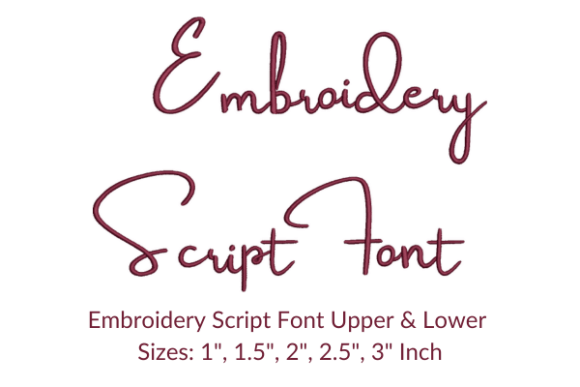
Billigant Font: A Smart Choice for Small Business Embroidery
As an embroidery designer who’s developed and tested hundreds of fonts for commercial use—from café aprons to boutique tote bags—I approached Billigant Font with a specific question: *Does this machine embroidery design deliver both visual appeal and real-world reliability for small business merch?*
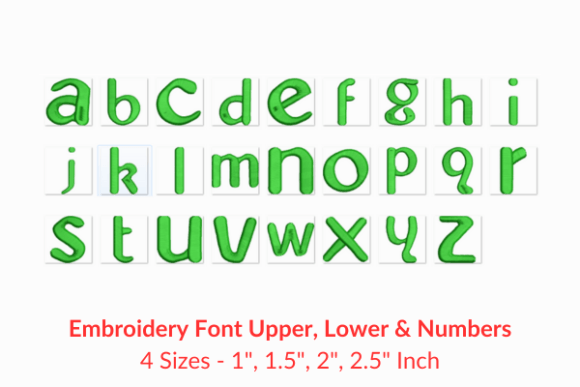
Right away, the name “Billigant” suggests something bold yet approachable—neither overly formal nor cartoonish. Based on its positioning as a high-quality embroidery font built for personalization (names, dates, quotes), I expected clean lines, balanced spacing, and intentional letterforms—not just decorative flair. And in practice, Billigant Font delivers a friendly, modern, and subtly confident personality. It reads as professional without stiffness, handmade without sacrificing polish. That balance is rare—and vital—for businesses like bakeries, florists, pet brands, or creative studios that need their embroidered patch or cap embroidery to feel authentic *and* trustworthy.
Where Billigant Font Shines in Real Business Use
Billigant Font excels where clarity, consistency, and brand warmth matter most. For a local café stitching names onto barista aprons? Its open letterforms and generous x-height ensure legibility even after dozens of washes. For a handmade shop embroidering a subtle “Est. 2022” on tote bag handles? Its clean rhythm supports quiet sophistication—not shouting, but staying memorable. And for an Etsy seller offering custom-embroidered patches as add-ons? Billigant Font scales beautifully across sizes, holding integrity from 1.5-inch chest logos to 3-inch sleeve accents.
It works especially well for:
- Embroidered patches used on jackets, backpacks, or product packaging—its balanced stroke weight avoids thinning out or bleeding on twill or denim;
- Staff uniforms and aprons, where readability and durability are non-negotiable;
- Cap embroidery on structured fronts—its moderate width prevents crowding in curved hoop areas;
- Tote bag design and boutique merchandise labels—adding a refined, hand-crafted tone without looking generic;
- Customer gifts and event merch, where consistent branding builds recognition across touchpoints.
Because it’s designed as a true machine embroidery design, not a converted TrueType font, Billigant Font respects stitch logic: no over-travel, minimal jump stitches, and thoughtful underlay. That means fewer trims, cleaner finishes, and faster production—critical when fulfilling orders for schools, studios, or seasonal pop-ups.
Where to Use Billigant Font Thoughtfully
Even strong embroidery files have limits—and knowing them protects your reputation and your client’s budget. With Billigant Font, I recommend extra caution in these scenarios:
- Small patch sizes under 1 inch: While legible at 1.25", fine interior details (like tight counters in “e” or “a”) may soften on textured fabric or with lower thread count. Always test at actual size.
- Cap fronts with steep curvature: The font’s clean structure handles curves well—but avoid cramming more than 8–9 characters on a standard front panel without adjusting kerning or scaling down.
- Dark uniforms or heavy fabrics: High stitch density helps, but contrast matters. Test black thread on navy twill *and* white thread on charcoal—don’t assume visibility.
- Frequent-wash items (e.g., restaurant aprons, daycare staff shirts): Confirm stabilizer pairing. A medium-weight cutaway + tear-away combo often yields the crispest long-term result with Billigant Font.
Also note: As a digital embroidery file, its performance depends heavily on your digitizing workflow. If you’re layering it into larger compositions—say, a floral monogram + Billigant Font tagline—check spacing between elements. Tight tracking can cause thread nesting; generous line spacing (at least 1.8x height) keeps the finished product breathable and professional.
How Billigant Font Strengthens Brand Identity
Your choice of embroidery font isn’t just aesthetic—it’s a silent ambassador. Billigant Font reinforces brand identity by projecting approachability with authority. Unlike ultra-thin scripts (too fragile) or blocky sans-serifs (too impersonal), it signals care, craft, and consistency. Customers notice that. A florist using Billigant Font on reusable gift totes conveys thoughtfulness. A pet brand stitching it onto bandanas says “we know quality—and we treat your pup like family.”
That perception directly impacts customer trust and perceived product value. When a handmade product carries crisp, confident lettering, buyers subconsciously assign higher craftsmanship standards—even before touching the fabric. For small business owners selling on Etsy or at local markets, that subtle lift in perceived professionalism translates to stronger engagement, repeat purchases, and organic word-of-mouth.
Practical Designer Notes Before You Stitch
Before committing Billigant Font to your next batch of custom apparel or embroidered patches, run these checks:
- Test it in black and white first—no color distractions—to assess spacing, weight balance, and edge clarity;
- Verify legibility at your smallest intended patch size (e.g., 1.25" wide) on actual fabric swatches;
- Review thread color contrast against your base material—especially on dark or heathered textiles;
- Inspect kerning and leading if combining with other design assets (logos, icons, borders);
- Confirm hoop size compatibility—some versions may require larger hoops for full-word layouts;
- Always test on real fabric with your preferred stabilizer; texture changes everything;
- Create a printable mockup for client approval—visual context prevents costly rework;
- Compare side-by-side with your existing design assets to ensure visual harmony;
- Double-check commercial licensing—since this is positioned for small business merch and School/Embroidery use, confirm usage rights cover resale, client projects, and digital distribution.
In short: Billigant Font is a versatile, business-ready embroidery file—not just another decorative option. It bridges handmade charm and commercial practicality, making it a smart investment for anyone building recognizable, durable, and emotionally resonant branded merchandise. Whether you're stitching for a neighborhood bakery or launching your own line of embroidered totes, Billigant Font earns its place in your core design assets.